Sunday, 6 January 2013

Blue Crane Bird Facts And Pictures


One of the more diminutive crane species, Blue Cranes are four feet tall and weigh around eleven pounds. Figure plumage is shiny pale blue dull coming to be darker on the upper neck and the easier a large part of the head and scruff. Blue Cranes are one of two animal variety of cranes that don't have exposed, red skin on their heads. The feathers of the crown and brow are light faded white, while the cheeks, ear coverts and scruff are gloom ashy faded, which they raise (or lighten) throughout danger presentations, generating a dissimilar cobra- like look. Blue Cranes have short bills and dark legs. The essential quills are dark or slate faded. The tertial plumes of the wing are long, dim and dangle practically to the ground, giving this crane a rich presence. Guys and females are virtually undefined. Adolescents are to a small extent lighter blue faded than grown-ups, and fail to offer the long wing tertials.

The Blue Crane is a flying creature of dry prairies and other upland territories. Where shallow wetlands are ready, Blue Cranes will perch and bolster in them. Mated sets of cranes, incorporating Blue Cranes, participate in unison calling, which is a mind boggling and amplified sequence of composed calls. The fowls stand in a particular carriage, more often than not with their heads hurled back and noses skyward throughout the presentation. The male constantly lifts up his wings over his back throughout the unison call while the female keeps her wings overlapped at her sides. In Blue Cranes the male launchs the presentation and utters one call for every female call. All cranes participate in moving, which incorporates diverse conducts for example bowing, hopping, running, stick or grass throwing, and wing fluttering. Moving can happen at any age and is generally connected with wooing, on the other hand, it is for the most part thought to be a standard part of engine growth for crane s and can serve to impede quarrelsomeness, soothe tension, and fortify the pair bond.

Proof prescribe that the blue crane is essential veggie lover and consumes minor bulbs, seeds and roots. They do, nonetheless, consume a mixed bag of creepy crawlies (grasshoppers, termites, caterpillars, grasshoppers, scarabs, and so on.), worms, crabs, fish, frogs, reptiles, and minor well evolved creatures. The blue crane is frequently reported doing harm in different horticultural products, for instance wheat, grain and lucern. As a rule the fledglings are nourishing on spilled grain. In the Overberg, they customarily bolster from food canisters set out for sheep and ostriches. Winged animals bolster basically by pecking, yet they do burrow utilizing their bills.
 Blue Crane
 Blue Crane
 Blue Crane
 Blue Crane
 Blue Crane
 Blue Crane
 Blue Crane
Blue Crane

Saturday, 5 January 2013

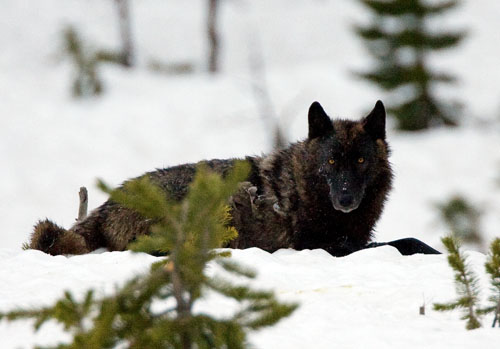
Black Wolf in Snow Facts And Photos


Rise of dark- colored wolves is the immediate come about of people raising canines as pets and large animals trouble, as per revamped research by an University of Calgary biologist circulated today by the prestigious scholastic diary Science. Furthermore dull shading may likewise help the survival of the species as wolf natural surroundings is influenced by atmosphere update sometime to come, the study prescribes. 


"Granted that it happened by mischance, dark wolves are the first case of wolves being hereditarily- built by folks," stated Marco Musiani, a globally- distinguished master on wolves and a teacher in the U of C's Faculty of Environmental Design. "Taming of mutts has accelerated dim- colored covers in wolves, which has ended up being a valuable characteristic for wolf inhabitant numbers as their cold natural surroundings psychologists," Musiani stated. "It additionally shows that human actions can help advance the hereditary differing qualities of wild creature inhabitant numbers, which is an extremely sudden finding." 

With tundra territory needed to decay in impending years because of northern development of boreal backwoods identified with a dangerous atmospheric devation, the scientists note that dark shading may moreover help dull wolves acclimate to their modifying surroundings. 
Black Wolf in Snow  
 Black Wolf in Snow 
 Black Wolf in Snow 
 Black Wolf in Snow 
 Black Wolf in Snow 
 Black Wolf in Snow 
 Black Wolf in Snow 
 Black Wolf in Snow 
 Black Wolf in Snow 
Black Wolf in Snow 

Friday, 4 January 2013

Antelope Animal Facts And Pictures


The Antelope is a deer- such as well evolved creature discovered in Africa, Asia and parts of the Americas. There are numerous diverse species of impala incorporating the small Royal impala that stands at the stature of a rabbit! 

Unlike deer that restore their horns yearly, the eland has solid changeless horns, that impala mostly utilize to guard their crowd or to battle different pronghorns. 

Antelope arrive in a mixed bag of shapes and sizes and colours. Some are exceptionally humble, for example the dik or the illustrious impala which is around 25 cm elevated at the shoulder. The most imposing is the eland (declare ee- land), standing at about 1.8 m towering at the shoulder and weighing over 650 kg. 

Antelope horns arrive in a tremendous mixture of sizes and shapes. They might be spiralled, curved, bended or straight. The most extensive have a place with the male more terrific kudu (declare koo doo), which has horns that can develop to well-nigh 2 m in length. 

Eland species could be recognized in Africa, Asia, and the Middle East. Nilgai and four- horned elands exist in India. From Africa come the kudu, sitatunga, bushbuck, bongo, eland, reebok, reedbuck, waterbuck, duiker, gnu, impala, hartebeest, and various assortments of diminutive person gazelle. The sable impala, roan pronghorn, oryx, addax are reputed to be steed elands and exist in Africa and the Arabian Peninsula. Gazelles exist in Africa and Asia. From Central Asia come the saiga and the chiru, otherwise called the Tibetan pronghorn. 
 Antelope
 Antelope
 Antelope
 Antelope
 Antelope
 Antelope
 Antelope
Antelope

Thursday, 3 January 2013

African Wild Dog Facts And Pictures


The African wild canine, in addition called the chasing canine, is a vanishing species in East Africa. Field studies have indicated that the wild canine is a quite canny and social creature. Like most predators, it plays a vital part in dispensing with broken down and powerless creatures, subsequently making look after an expected equalize and when its all said and done enhancing prey species. The stereotype of the wild puppy as a merciless butcher is tediously being reinstated by a less cruel representation. 


Wild mutts exist in packs of six to 20. Depending on if the pack numbers fall underneath six, chasing effectiveness is dissolved. The puppies have an impossible to miss rather perky service that bonds them for a regular reason and launchs every chase. They begin flowing around the other pack parts, vocalizing and touching until they move toward getting electrified and are equipped to chase. They begin the chase in an ordered, helpful way. At the point that prey is focused on, a percentage of the mutts run near the creature, while alternates take after behind, taking over when the go- to person tired. They can run long separations, at paces up to around 35 miles for every hour. 


Regularly just the alpha male and female imitate, while different parts of the pack help look after the youthful. Pups are conceived each year, generally from March by way of June. A litter may hold the same number as 16 pups, admitting that baby mortality is towering. 

African chasing canines are jeopardized. They are challenged with contracting room to wander in their African home. They are likewise entirely vulnerable to ailments spread by household creatures. 
african wild dog
 african wild dog
 african wild dog
african wild dog 
 african wild dog
 african wild dog
 african wild dog
african wild dog

Wednesday, 2 January 2013

Waved Albatross Info And Pictures


The waved gooney bird is extraordinary in being the most vast winged animal in the Galapagos Islands, and the sole gooney bird species recognized fully within the tropics 3. It has a white head, with a tinge of rich- yellow on its crown and neck. The figure plumage is basically a chestnut- tan, with a whitish bosom and underwing. Its bill is a dull yellow, and its feet are somewhat blue 5. Adolescents vary to a small extent from mature people by having a whiter head and a more blunt bill 2.

This substantial seabird encourages on fish and squid from the surface of the sea, and moreover on scavangers. It is thought to frequently food throughout the night, when squid swim closer to the surface, making for a more effortless dish. The waved gooney bird has additionally been perceived taking nourishment from different winged animals, for example boobies; a sustaining methodology that is called kleptoparasitism.

This grown-up waved gooney bird on Hood Island (or Espanola) is arranging to breed. You can see the wavy plan of quills on the midsection that give the fowl its name. The gooney bird does not fabricate a home; it needs simply to discover a suitable spot right around the rock fields. Here it rub an unpleasant experience that serves as a home

Waved Albatross : In The picture and heading arrangement indicated above is just estimated. A more exact representation can be shown once you click on the 'redo' binds and get to the zazzle outline studio. • Choose your item You have picked to purchase a T- Shirt with this visualization
 Waved Albatross
 Waved Albatross
 Waved Albatross
 Waved Albatross
 Waved Albatross
 Waved Albatross
Waved Albatross

Tuesday, 1 January 2013

Weddell Seals Snow Animal Info

Weddell seals were named after a British ocean officer in the 1800s, Sir James Weddell who likewise has an ocean in the Antarctic named after him. The proposed seals exist and swim in assemblies around splits and inhaling gaps in the pack ice of the Antarctic, all the more biting gaps with absolutely slender zones of ice with their canine teeth. Weddell seals can drink ocean water and they additionally consume snow. They can remain underwater for up to a hour while chasing.

The female Weddell seal conceives an offspring on the ice, more often than not within a modest settlement of different females, however the species is just inexactly social, and people remain overall separated out. Births occur between September and November, and a specific pup is normally born, or sporadically twins. The female remains with the pup for the beginning couple of weeks, encouraging it on drain that is incredibly elevated in oversized and protein, so that the pup additions just about two kilograms in weight every day. The female does not scrounge throughout this time, and gets in shape 2- 3-4-5-7. After the first two weeks, the female begins to take the pup into the water, where it studies to swim 2- 4-6. Weaning happens at around six to seven weeks. After the final pups have been weaned, the quick ice splits up, the grown-ups scatter, and the pups are abandoned to battle for themselves.

Weddell seals are particularly vocal. Their calls could be gotten notification from on the ice all the more when seals themselves are underneath. The seals "pull out" onto the ice to rest, shed, or conceive an offspring. Females generally have one pup in September or October. The aforementioned little are silver or resplendent (their folks are dull) and can swim by two weeks of age.
 WeddellSeal
 WeddellSeal
 WeddellSeal
 WeddellSeal
 WeddellSeal
WeddellSeal 
 WeddellSeal
WeddellSeal
Related Posts Plugin for WordPress, Blogger...